
Should we regulate blind boxes to manage gambling risks?
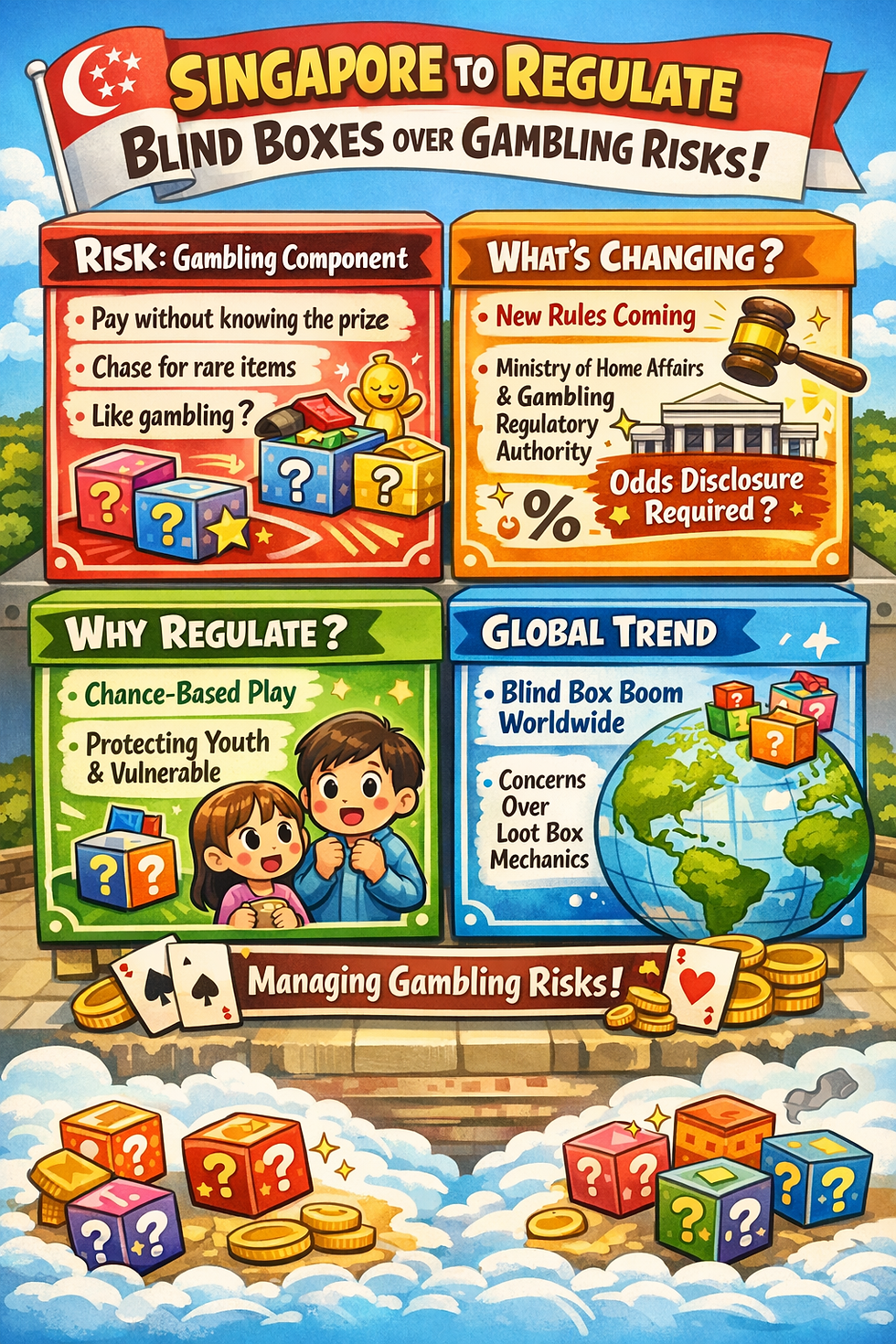
I remain neutral regarding the regulation of blind boxes. Personally, I prefer purchasing products that I can see or know in advance. Blind boxes can be compared to gashapon dispensers or claw machines, which create the impression or possibility of obtaining a high-value or rare item with a relatively small amount of money. In that sense, they share similarities with collectibles such as Pokémon cards, coins, or even fine wines for certain individuals.
The potential risk to consumers lies in impulsive or excessive purchases, similar to a shopping spree. If consumers have the financial means to make such purchases without incurring debt, it may not be problematic. However, concerns arise when collecting these items leads to financial strain, debt, or hoarding behaviours. There may also be broader concerns regarding overconsumption and environmental waste.
As blind boxes do not directly provide monetary or tangible rewards beyond the item purchased, they may be less addictive or less likely to induce gambling-like behaviours compared to activities that offer financial incentives. Typically, the value of the item received is equal to or lower than the purchase price, and the appeal lies more in collectibility than financial gain. Additionally, the trend of blind boxes may be cyclical in nature, with demand potentially decreasing over time.
To date, I have not encountered any clients presenting issues specifically related to blind box purchases. The behavioural concerns I have observed in practice tend to relate to other forms of addiction or compulsive behaviours, such as smoking, alcohol use, hoarding, or contamination-related obsessions.
From a consumer protection perspective, it may be helpful if regulations require manufacturers or sellers to be transparent about the odds of obtaining rare items. Greater transparency could support informed decision-making, as there is a risk that unscrupulous sellers may not accurately represent the availability of rare products. However, enforcing or verifying stated odds may present practical challenges.
In addition to or instead of regulation, increasing public financial literacy and consumer education may be beneficial. Public campaigns could encourage individuals to spend within their means, practise mindful consumption, save for emergencies, and be conscious of environmental sustainability. The government could also collaborate with businesses to display reminders promoting responsible purchasing. That said, such measures may be challenging to implement fully, as businesses are naturally driven to increase sales and maximise profits.
Some of my above comments are featured in South China Morning Post:


Comments